Thursday, 17 November 2016

Schools Collaborating - TeachMeet Christchurch

I love going to these TeachMeets. I always come away being inspired by something and getting excited by little bits of information, or a new tool, or just hearing about what others are doing in their schools. Today was certainly no different - including the awesome food put on by our host school, Villa Maria College.
These are just my notes on today and I have just done a quick summary on each presentation. You can also have a look at the tweets made today using #TMChch.


Aidan Harrison (Middleton Grange School)- Christian Bicultural Learning 


Aidan gave us a quick digital korowai before taking us through his learning as a bilingual teacher. He went through a short Cultural Narrative for Villa Maria College, reminding us all that every school should have one and we should all be aware of this. I thought at this time how lucky we are at Haeata to have had time to explore our Cultural Narrative and how much it underpins all that we will do there.  He talked about Tātaiako - Cultural competencies for teachers of Māori learners and I found this reinforced the learning I have been doing at Haeata over the last few weeks (see other posts on my blog for more info on this). He mentioned about the challenges for staff around not feeling confident with Bicultural learning and he offered support for anyone wanting to know more.
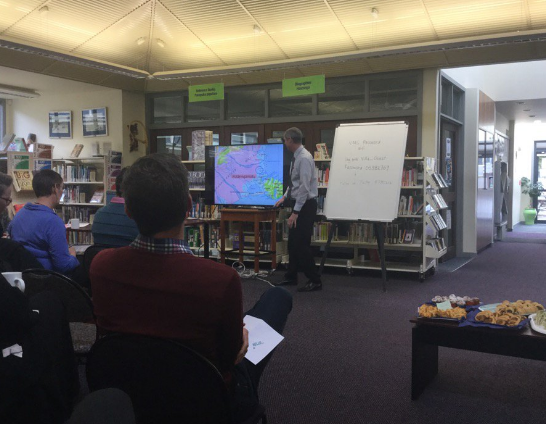


Schira Withers (Our Lady Star of the Sea School) - Facilitating the teaching of Character Strengths using Positive Psychology and enhancing Wellbeing


Schira spoke about promoting wellbeing though Character strengths. There are 5 schools in a cluster on the southeast of Christchurch who are using the VIA Institute Character Strengths to promote wellbeing in their schools for staff and for students. They get everyone to do a survey to start with (on the site) to help them discover what their strengths are. The school focuses on 2 strengths each term (there are 24) for example, Bravery and Persistence and they look at topics such as the Olympics or books on these topics. Their school musical production is based around Creativity and Confidence. This approach works on being comfortable with who you are which I like.
I decided to do this test and it was surprisingly correct for how I see myself so I was pleased to see my top 6 character strengths were Honesty, Kindness, Leadership, Judgement, Fairness and Perspective. 
She also told us about the World Character Day which celebrates these character strengths. This site also has a huge range of resources that can be used to develop character. I had a look at a few of these and was amazed at how many there were and how easy it was to search for one of the 24 character strengths by age and media. What a great resource.


Jenni Williams (Redcliffs School) @nzgirljen - Quick and easy collaborative online tools


Jenni took us through 4 online tools she uses.
AnswerGarden from the TeachMeet
Answer garden - She found out about this at ULearn and I must say it looks great. She asked us "What do you enjoy about being part of TeachMeet?" and we had only 20 characters to answer. A really good way of getting quick brief feedback to get the most popular theme or idea and you can also export to Tagxedo or a wordle, send to Twitter!  The About AnswerGarden page is really useful to describe this in more detail. 
Padlet - This was a reminder for me as I have used Padlet in the past, but one new thing for me was that you can now share it with a QR code. It's really good for collaboration and some of my students have also done presentations with it in the past.
Coggle - This is a simple collaborative mindmap which you can add photos and images to. She got her students (use gmail account to login) to put pictures of themselves and then add information they wanted to share. Jenni used it for students to get to know others and to put in ideas about careers. I do like how it is set out.

Trello - I have seen Trello at a TeachMeet before but this was a good reminder of this project management tool. Jenni uses it for groups of students such as the magazine team or the formal group so they can gather information in one place about what they need to get done. They then have boards for to do, doing and done lists. I want to look into this a bit more and see how it might work for projects at school for myself and ākonga.


Snippet


Just before the break we were shown nGram which shows how many times words have been used in literature over a period of time. We were challenged to think about how this could be used in a classroom. At the end of the TeachMeet, Matt Davis shared his ideas with Pauline Henderson and myself and I got very excited about how you could use this tool to ask the "what if" questions. It also got us thinking about what happened in the past and what effect it had on literature and society. It certainly created a lot of discussion with us at the end of the day. Some of the searches that had interesting results were:
  • forces, energy, speed - interesting to see what happened over the 1920-1940 time period and also the 1960s when space travel changed the scientific thinking (see the image here)
  • AI (Artificial Intelligence) and ethics -showed an increase in books in 1980s - why?We wondered about  the implications of Moore's law in some books and we wondered about cloning on the effect of ethics. One thing was the AI increase in the 1820's - maybe a book on the future, or maybe AI meant something different then!


Duncan Bond, Nadene Brouwer, Richard McBrearty (Burnside High School) @bondteach - Collaboration in a Secondary School Curriculum Area


This school started with single cell classrooms then cut walls so they could cater for approximately 90 students with 3 teachers.
They made it optional for their faculty to be involved. The timetable had to be changed around so that all the classes were on at the same time and they have ended up with 2 trios at yr 9 and 2 trios at yr 10 - about a 3rd of their students are going through this style of learning that has a skills emphasis rather than content focus. They meet once a fortnight to plan next fortnight and their non-contacts are aligned with each other so they have the time to do this.
There have been many positives from this including their continuous discussions around teaching and learning, and also the great relationships between both staff and students. Some of the challenges were around having conversations when the people you work with do something you don't like, the planning time and the noise in a larger environment.


Lee Nanai-Stewart (Catholic Cathedral College) @Nanaistewart - Culturally Responsive Practice


Lee introduced us to the Educultural wheel which was devised by Angus Macfarlane in 2004 which she learnt about in her Post-grad studies at the University of Canterbury. She talked about how to understand the culture of the child, you have to understand your own culture. Lee encouraged us to share our background with our students and get to know our student's background. We need to demonstrate that we care in actions, not just words. The four parts of the wheel go together to create a culture in your school but are not designed to be taken in isolation. There is a blank version to record examples of when/where the concepts have been present in your class, or not present as the case may be.
She gave us some further reading to do:
Sociocultural Realities by Macfarlane, Macfarlane and Webber
Discipline, Democracy and Diversity by Angus H Macfarlane
Article: Creating culturally-safe schools for Māori students - Macfarlane, Glynn, Cavanagh, Bateman


I can't recommend attending these TeachMeets highly enough. It is an opportunity for teachers to share what they are doing in everyday practice and I always come away with a taonga for my kete. Exciting.

Posted by: 

Thursday, 3 November 2016

Breaking down the Silos - Stephen Kennedy


What happens if schools stop teaching subjects and start explicitly teaching values?


What happens if ideas like ‘conscientised’ and ‘Spirit driven’ leap off the laptops?


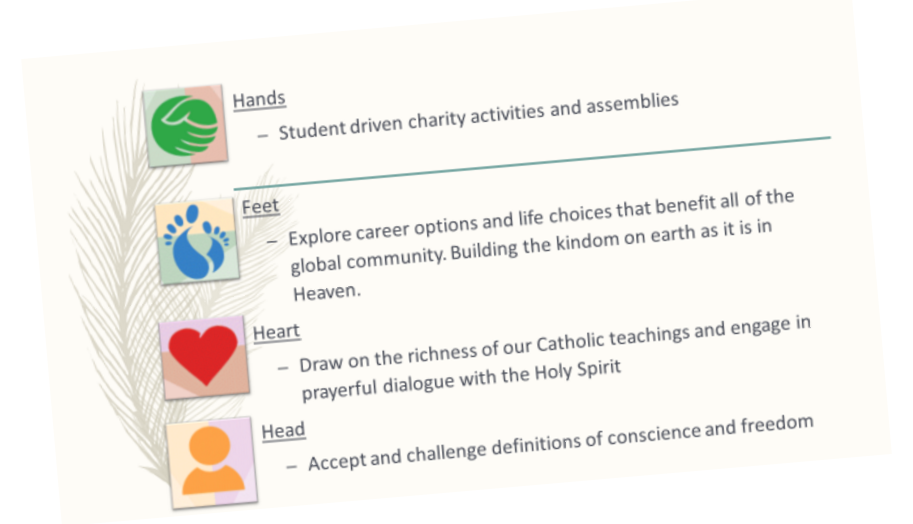
This year Stephen Kennedy (Leader of Learning for Religious Studies) has launched “Year 12 Justice and Peace” blurring traditional subject boundaries by focusing on learners who seek a world that is conscientised, ethical, compassionate, spiritual, engaged and hopeful.

You can see more of this programme which is being extended in 2017, to include a  Year 11 Conscience and Freedom class here.

If you and your staff are interested in learning more about this programme please email Stephen Kennedy via  skennedy@stc.school.nz  who is willing to discuss this with you further. 

Wednesday, 2 November 2016

Filming for the Church Strand Year 7 & 8

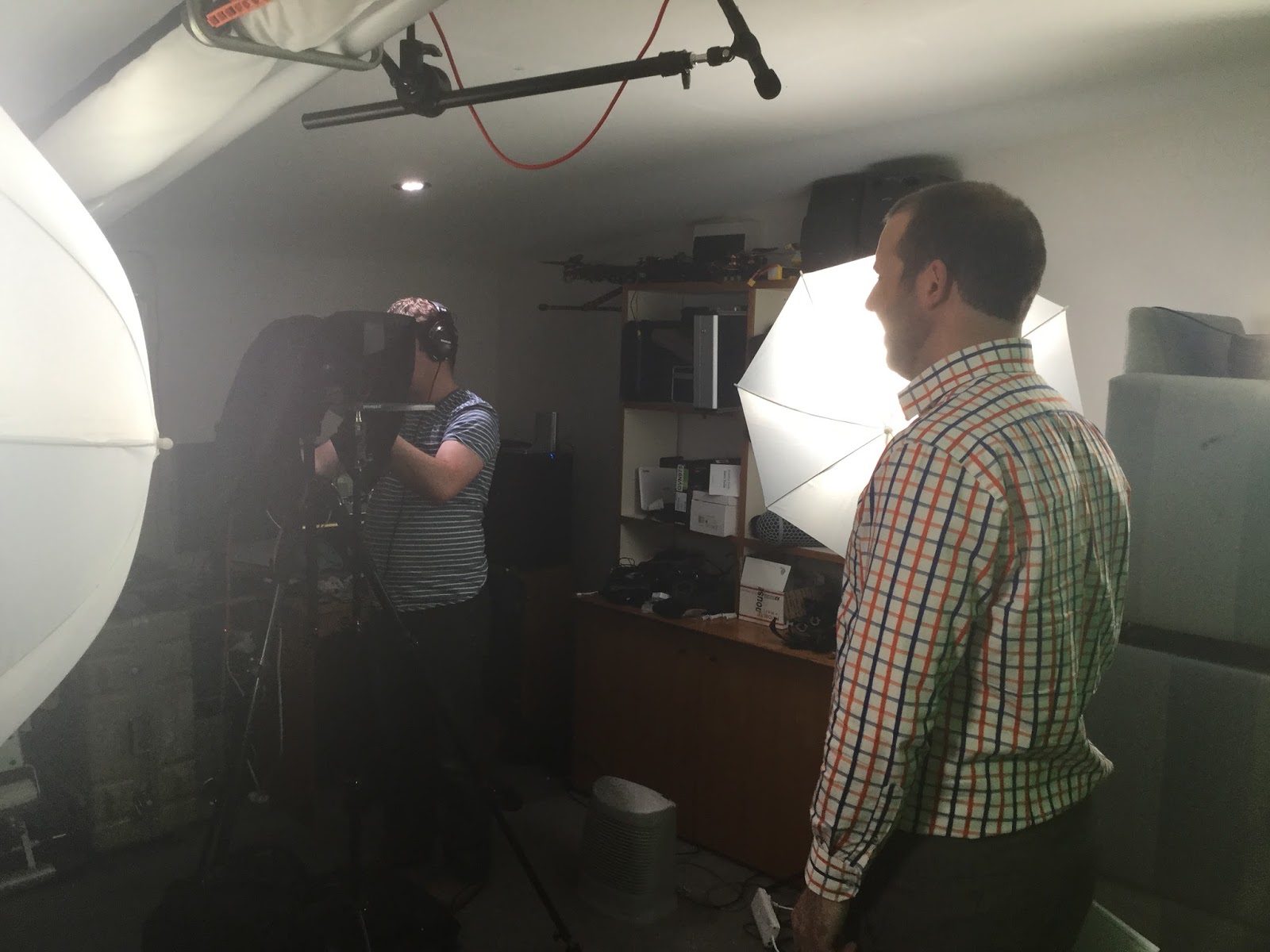
Today Cushla, Rory and I filmed seven lessons for The Church Strand in Years 7 - 8 with the help of Jason McTeague.

Rory discussing Jesus as teacher.

We have changed the presentation of lesson content from our initial trial completed in Term Three. We originally presented content via screen casting and have since changed this to a green screen format. The reason for this change is to increase  active learning opportunities within a lesson rather than lessons being passive 'downloads' of information.

To provide more detail on the Flipped Learning pedagogy the Church Strand is using it can be summarized as:

Flipped Learning is a pedagogical approach where direct instruction and homework elements of learning are reversed. Short, “concept videos are viewed by students at home/ or in class enabling class time to be used for the application of this knowledge in projects” (Bergmann & Sams, 2014, p.7) or group discussions.
To find more about the Flipped Learning pedagogy follow read this literature review.


Image result for flipped learning


We will continue filming over the next week and as you can see we are managing to fit in some fun too!

The beginning of a lesson.


Resident Make - up artist and presenter

Reflecting on the day.

Thursday, 13 October 2016

The future of Catholic Schools - Br David Hall

Below is a presentation by Brother David Hall (Dean of La Salle Academy for Faith Formation) on the future of leadership within Catholic Education.


Within this presentation Hall discusses three features that we would need from Catholic leaders within our Catholic schools. These are:

1. They know the Catholic Tradition
There is no way you Catholic leaders can lead unless they know the tradition they lead in.

2. They know where they situate themselves within the Catholic Tradition.
Catholic school leaders know where they situate themselves allowing them to faithfully deliver the tradition and where to orient themselves.

3. They know their responsibilities & know their people.
Catholic school leaders understand what is required of them in their role and how to engage with people within their community.

Tuesday, 11 October 2016

To collaborate or not to collaborate?

Collaboration is a common term used within education to the point it can be called a 'buzzword'. However, have you or your school sat down to discuss the difference between co - operation and collaboration or if there is a even difference between the two?

We could break these two terms into a  simplified explanation below:


However, the current pace of change requires us to delve deeper and explore how this looks in education.

Professor Morton Hansen (University of Berkeley - Management) explores the importance of collaboration and four types of workers.


The Lone Star 
The person who wants to do their own thing. As a teacher they are focused on their goals and their students. They often struggle to collaborate or work well in teams.

The Butterfly
The person who wants to collaborate on every initiative without focusing on their own work.
As a teacher they volunteer for new initiatives and committees and as a result their work suffers.

The Laggard
The person who wants the status quo to remain and block any change.
As a teacher they may not want to try anything new (initiative overload) but there may be reasons for this that need investigating.

The T- Shape Worker
The person who is able to work horizontally and vertically.
As a teacher they are able to work well individually and are able to collaborate in teaching teams.


Which worker will be required in our education future?


The T - Shape worker.

T- Shape workers are teachers who have a deep understanding of their practice, can collaborate with others across and outside of the education sector, make decisions that benefit all learners.


https://goo.gl/TFz9KU

"By 2026 work will be 80% collaborative and 20% individual". (Team B)


As teachers we are often consumed with what is happening within our own school community. A question to ask yourself is: When was the last time that I talked  or collaborated with someone outside the education sector?


There are many disciplines that compliment  education and provide a new viewpoint that challenge some of our current assumptions. An example of this is the Canterbury DHB who have integrated the use the iPad Mini into their patient medication administration and observation. The Charge Nurse is able to view if medication has been administered on time and whether the correct amount of medication was given to the patient.


 This system was created in the Canterbury DHB Design Lab where they begin with patient centered health care. 

Is this model of design thinking a process that could be integrated into our education sector?


A fantastic starting point when looking at your collaboration pattern(s) is broken into five areas by Dr. Cheryl Doig. 


An important question to ask at this point is: How do I collaborate with others?


To provide a framework for collaboration we can look at specific 'keys' that will help you get this process started.

Agree - that collaboration is worth doing.
Define - the right team - are they needed, will they contribute?
Name - your purpose and underpinning principles - write it, display it and live it.
Be honest - about expectations and accountabilities.
Develop - systems for incidental encounters and meetings that happen.
Invest - in the cultural technology - grow relationships.
Do less - better, focus, inquire and pivot. 


Collaboration is an important skill that we will all need to develop. It allows for new relationships and learning to occur - a feature of our humanity that brings us great joy. 


Wednesday, 5 October 2016

Prayer Ritual for the beginning of Term Four


As we enter into the final term for 2016, Cushla O'Connor has created a prayer ritual for your staff to use.

Cushla has focused on the theme of doing small things well with great love with mention to St Teresa of Calcutta and Suzanne Aubert.


Tuesday, 4 October 2016

Connected Educator - Professional Learning Network


We hope that you are having a relaxing holiday and are enjoying your time with family and friends. I thought I would introduce you to 'Connected Educator' provided by CORE Education. The purpose behind this initiative is to provide a platform for teachers to have a network for educational professional learning. 

Previously, 'Connected Educator' lasted for one month (usually October). However, this has been opened up for year round Professional Development! To participate take a look at the calendar and see if there is an event that you would like to offer that is free and one that people can participate online. This could take the form of a Twitter chat, Webinar or a discussion group that can support learning in your area. 

Throughout October, this initiative will connect in with the U.S. based team to offer a global calendar of events to teachers, enabling you to participate in events from around the world. 

Have a look at the Connected Educator website to find out the events happening around you and how you can contribute your own events. 


There is a fantastic resource available to get you started on your Connected Educator  journey.


The development of our Professional Learning Programme

In 2016, we sat down and re frame how we deliver professional development to teachers in the Christchurch Diocese. Instead of the typical s...